

AI works for kids by using programs that learn from data to think, play, and solve problems, just like humans do. Discover smart machines and their role in daily life.

Kids encounter AI in everyday technology such as voice assistants and streaming apps, often without realising it. Letting your child learn AI early can open various future career opportunities. Your child will learn to think logically and solve problems in the face of challenges. AI will prepare them for a world where technology is necessary at every turn.
If your child is curious about smart machines, coding, or how tools work, structured lessons can help turn that curiosity into practical skills. Software Academy’s AI & Machine Learning Course for Kids introduces young learners to artificial intelligence. Instead of only reading about AI, students explore how machines learn, make decisions, and solve problems.
This guide breaks down how AI learns, where it shows up in daily life, and why understanding it matters for your child’s future.
Key Takeaways:
- AI learns from data, not instructions. It studies huge amounts of examples until it can recognise patterns on its own.
- Kids can start experimenting today with free, beginner-friendly AI tools like Google’s Teachable Machine.
- 49% of parents have never discussed generative AI with their children, even though kids use these tools daily.
- AI does not think or feel like humans do. It predicts based on patterns, which means it can still make mistakes.
- Hands-on projects build real skills. Coding programs like Scratch gives kids a head start on computer science.
AI is shaping the future. Give your child the skills to understand it.
What Is Artificial Intelligence (AI)?
AI stands for artificial intelligence, a technology that enables computer systems to learn, reason, and solve problems that would normally require human intelligence. Rather than following a single fixed command, AI is a powerful tool designed to help humans make decisions based on information it has previously processed.
Human intelligence builds on years of lived experience. AI concepts borrow that same idea but compress it into data. A computer system studies human knowledge captured in text, images, and sound, then uses that to comprehend patterns and respond in ways that feel surprisingly natural.
That said, AI does not think or feel like humans do. It compares new information against patterns it already knows and makes an educated guess. That distinction matters for kids to understand early on: an AI system can recognise patterns in data, but it doesn’t have real understanding or emotions behind its answers. Growing up in the AI age means kids need this distinction more than any previous generation.
How Does AI Work for Kids?
So, how does AI work for children? Picture your child learning to recognise a dog. They see enough dogs, in enough shapes and sizes, that they can spot one anywhere. AI systems learn the same way, just with data sets instead of real-world experience.

Learning From Data
AI systems learn from large amounts of data during training. To teach an AI system to recognise a cat, developers feed it thousands of cat photos so it can figure out which features, such as whiskers, ears, and fur patterns, make a cat a cat. The data is the raw material the AI system uses to build its understanding.
Using Algorithms to Identify Patterns
Algorithms are step-by-step instructions that AI follows to make decisions. When a new image comes in, the algorithm compares it against everything the AI has learned before. If the new image shares enough features with the training data, the AI recognises it correctly. This is also how AI sorts out distorted images in a photo app or flags a blurry scan as unreadable.
Making Decisions and Predictions
Once training is complete, the AI system uses what it learned to make predictions about new, unfamiliar information. This is decision-making without a human typing out every single rule. The AI system was never explicitly programmed with an answer for every possible scenario. It reasons from patterns instead, the same way a young child guesses at a word they’ve never seen based on ones they already know.
Improving Itself Over Time
Machine learning allows AI to improve from experience without requiring a person to reprogram it each time. The more data an AI system processes, the sharper its machine learning models become at making accurate, informed decisions. This same process, powered by neural networks, is also how AI-generated content, like written text or images that an AI can create, gets produced.
If you’d like to help your child understand these ideas better, learn how to explain AI to a child. It’s a great resource for parents who want to make AI fun and relatable.
Examples of AI in Everyday Life
In everyday life, AI shows up constantly, whether your family notices it or not. These are the places where kids most often run into artificial intelligence.
Virtual Assistants and Smart Speakers
Voice assistants use AI to understand spoken commands and respond to questions. A smart speaker like Alexa or Siri relies on natural language processing to understand and generate human language, so it can interpret voice commands and respond naturally. Ask it to play a song, set a timer, or answer questions about the weather, and it responds almost instantly.
Personalized Recommendations
Streaming services use AI algorithms to recommend shows based on viewing history. The same logic applies to songs based on listening habits and to online shopping, where AI enhances the user experience by suggesting products based on past user behaviour. This convenience comes with a trade-off worth discussing with younger kids: AI can erode users’ privacy by collecting and analysing personal data.
Transportation
GPS applications utilise AI to find fast routes and avoid traffic in real time. Google Maps uses this same technology in its Street View feature to show how places have changed. It’s a clear, visual example of AI solving real-world problems kids can actually see on a family road trip.
Healthcare
The medical field uses AI for imaging, helping doctors read CT scans, MRIs, and X-rays with computer vision, which lets AI systems recognise images and objects as a trained eye would. AI chatbots can provide misleading or harmful advice to children, which is worth knowing since 42% of students have used AI for mental health support instead of talking to a trusted adult.
Curious about how robotics and automation are changing jobs? Learn what’s next for the workforce with AI.
Education, Games, and Creativity
AI personalises learning experiences for students by adjusting lessons to each child’s pace, and it can also personalise learning for children with disabilities so they can learn at a comfortable pace. AI-powered tutors provide online resources for students and help automate teachers’ routine tasks, so there’s more time for actual teaching.
Outside the classroom, kids run into AI when a chess app lets them play chess against a smart opponent, when a writing tool helps them write essays or brainstorm ideas, or when a photo filter turns a selfie into a cartoon by learning to create images in a new style.
Social Media
Social media platforms use AI algorithms to moderate harmful content, recommend videos, and filter spam out of email management systems. AI enhances the functionality of spam filters in email services, catching phishing attempts before they reach inboxes. It’s also used in applications like predictive text and photo filters that kids use every day without a second thought.
Why Learning About AI Matters for Kids
Despite how much AI already shapes daily life, most families still haven’t talked about it. Here’s why that conversation is worth having sooner rather than later.
- Supports children’s development. AI is becoming a core part of many industries, and early exposure opens doors for future careers in tech, medicine, design, and beyond.
- Builds critical thinking and problem-solving skills. Getting a project to actually perform tasks correctly requires a child to find solutions when something breaks, which sharpens logical thinking far beyond the screen.
- Strengthens technological literacy. A young child who understands the basics of AI makes smarter, safer decisions with the AI-driven tools already in their pocket.
- Encourages creativity through their own projects. Building something, even a simple chatbot or image classifier, turns an abstract idea into something a child has made themselves.
- Gives high school students a competitive edge. Employers across many industries are already looking for AI-literate candidates, and early familiarity pays off later.
- Teaches responsibility. Helping a child understand how AI works also means helping them understand its limits, including where it can go wrong.
See your child’s confidence soar as they learn how AI really works!
How Can Kids Learn About AI
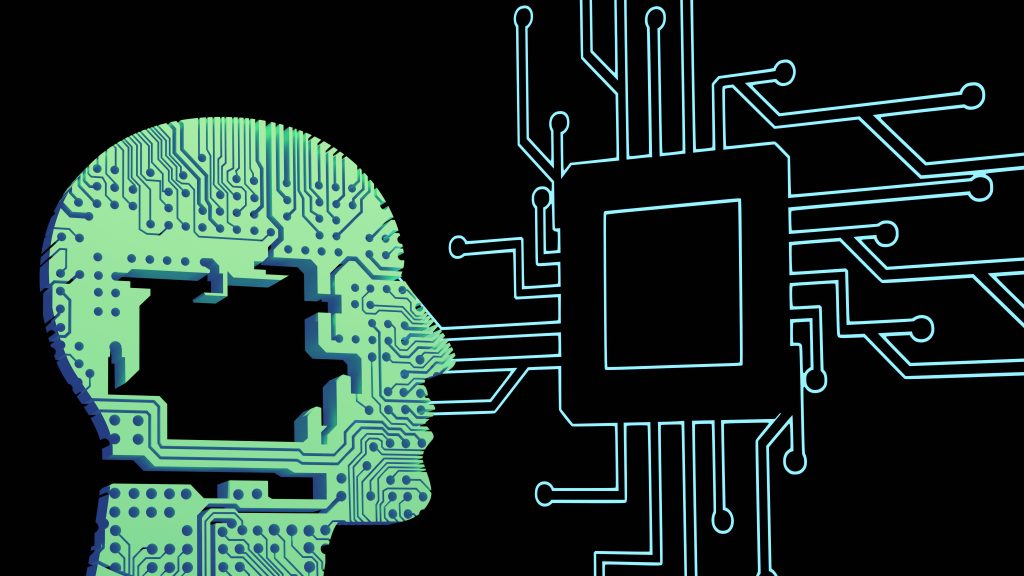
Getting started doesn’t require an advanced computer science background. Kids can learn AI through hands-on projects designed for beginners, using AI-driven tools built specifically for classrooms and living rooms.
Experiment with AI tools
Google’s Teachable Machine helps kids train AI models easily by feeding it examples and watching it learn in real time. Quick, Draw! is another approachable tool that shows kids how an AI system interprets a doodle and improves its guesses as it sees more data.
Learn to code
AI learning can include coding with programming like Scratch, which lets a young child build simple programs and games long before they write a single line of traditional code. Coding teaches kids to reason through problems methodically, a skill that carries over directly into building AI projects later.
Try a structured AI program
For families ready to go further, an AI program like Software Academy’s AI & Machine Learning Course for Kids introduces core AI concepts through hands-on projects, not just reading. Students explore how machines learn, how self-driving cars make decisions, and how tools like ChatGPT actually work, guided by UK-based tutors. AI courses for kids can lead to official qualifications, giving students a head start before they even reach university.
What Parents Should Know About AI Tools Risks
AI technology is a valuable tool, but it isn’t perfect, and kids benefit from knowing that upfront.
- AI can make mistakes by guessing based on patterns instead of a true understanding. It doesn’t verify facts the way a person double-checking a source would.
- AI systems can reflect biases present in their training data, meaning the answers or images they produce aren’t always fair or accurate.
- AI can create deepfakes that may harm individuals’ reputations, so it’s worth teaching kids early that not everything they see online, including images and videos, is real.
- AI chatbots can provide misleading or harmful advice to children, particularly around sensitive topics like health or emotional support, where a trusted adult should always be the first stop.
Fun, interactive, and future-ready. Let your child’s AI adventure begin.
FAQs
At what age should kids start learning about AI?
There’s no strict minimum age. Simple, visual tools like Quick, Draw! work well for younger kids, while coding and structured AI courses suit school-age children and teens.
Is AI safe for kids to use
AI can be safe with supervision, but parents should know that AI chatbots can give misleading advice and that AI-generated images or videos aren’t always trustworthy.
What’s a good first AI project for a young child?
Google’s Teachable Machine is a strong starting point. Kids can train a simple model with a data set they create themselves and immediately see how the AI responds. However, if you would like your child to attend small classes with tutor supervision, Software Academy courses are a safe, beneficial option.
Build Future Skills With AI for Kids
AI already touches nearly every industry, from healthcare to retail to education, and that presence will only grow. Kids who understand how it works today, rather than catching up later, walk into that future with confidence instead of confusion.
The best way to explain AI to a child isn’t a lecture. It’s letting them build something themselves, watch it learn, and see the pattern click into place.
Want your child to build their own AI projects with expert guidance? Explore Software Academy today.
